

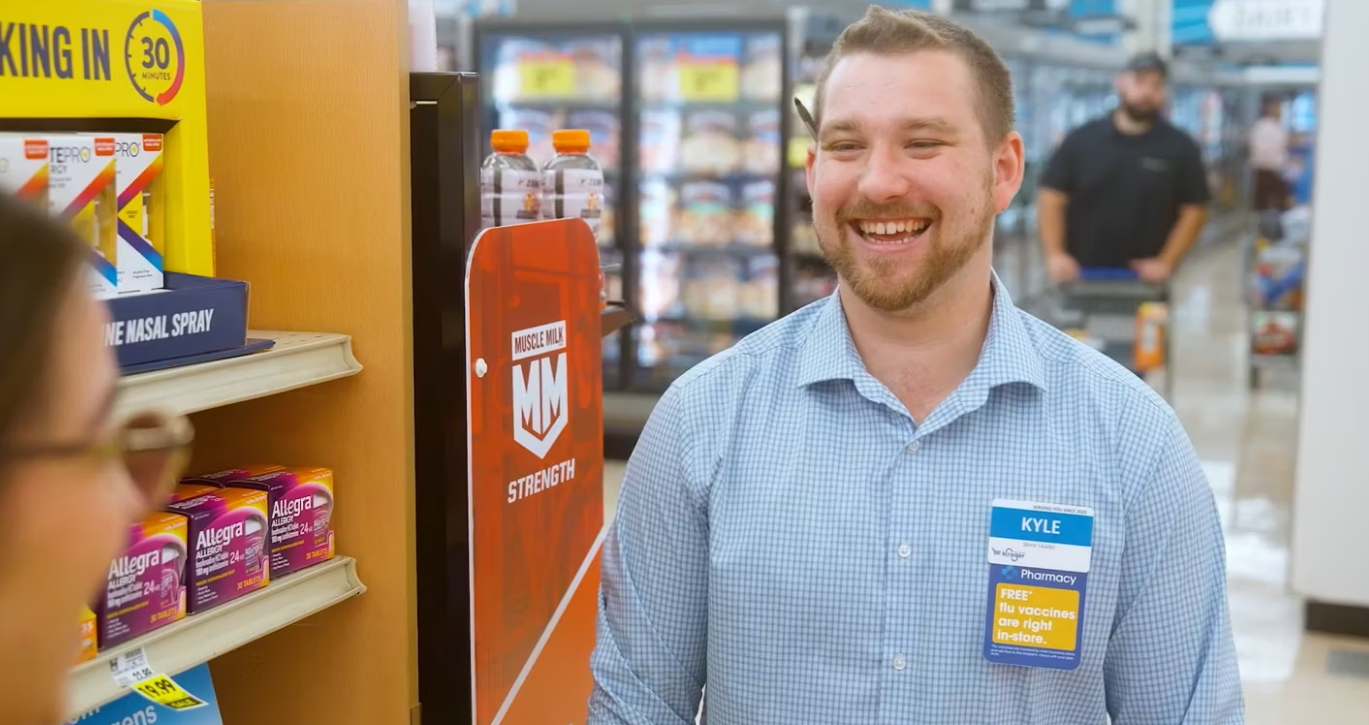
Let’s talk about Kroger. If you’ve never heard of them, that’s because they operate under about 20 different names—Ralphs, Fred Meyer, King Soopers, Smith’s, Fry’s, and more. But it’s all Kroger. They’re actually the largest supermarket chain in the U.S. with 2,800+ stores and nearly 500,000 employees.
Here’s what most people don’t realize about learning how to get hired at Kroger: they’re almost always hiring, the pay is competitive (especially if you join the union), and the benefits are actually solid. Plus, it’s a grocery store—which means steady, recession-proof work. People always need food.
I’ve helped thousands of people figure out how to get hired at Kroger, and I’m about to break down everything you need to know. The pay structure, the union benefits, the application secrets, interview tips that work, and what it’s really like working for America’s biggest grocer.
Whether you’re 16 and need your first job, 25 and looking for stable employment with benefits, or 60 and wanting part-time work in retirement, Kroger has positions. This complete guide on how to get hired at Kroger covers every step from clicking “apply” to wearing that blue vest.
Let’s get you hired. 🛒
The Quick Facts About How to Get Hired at Kroger
Here’s what you need to know right now:
💰 Starting Pay: $13-$17/hour (varies by location, higher with union contracts)
📍 Store Count: 2,800+ stores (multiple brand names)
👥 Employees: 465,000+ associates
⏱️ Time to Get Hired: 1-3 weeks average
🎂 Minimum Age: 14-16 years old (varies by position and state)
💉 Drug Test: YES (pre-employment)
🔍 Background Check: YES
🎓 Education Required: None for most positions
💪 Union: Many Kroger stores are unionized (big deal for benefits)
📅 Schedule: Flexible, 24-hour operations at many stores
🎯 Hiring Speed: Steady (always hiring somewhere)
Now let’s break down why Kroger is worth considering and how to actually land the job.
Why Kroger is Actually a Solid Job Choice
Before diving into how to get hired at Kroger, let’s talk about why it’s worth your time.
1. Union Benefits (This is HUGE)
Many Kroger stores are unionized through UFCW (United Food and Commercial Workers). This means:
- Protected wages – Union contracts guarantee pay scales
- Guaranteed raises – Scheduled pay increases based on hours worked
- Better benefits – Health insurance, pensions, paid time off
- Job protection – Can’t be fired without cause
- Grievance procedures – Recourse if treated unfairly
- Collective bargaining – Workers have negotiating power
Real talk: Union grocery jobs are some of the best hourly positions in retail. The benefits are closer to corporate jobs than typical retail.
2. The Pay Progression is Real
Starting pay: $13-17/hour
After 1 year: $15-19/hour
After 3 years: $18-22/hour
After 5+ years: $20-26/hour (for cashiers/clerks!)
Top-scale union grocery clerks can make $25-26/hour. That’s $50,000+ per year to work a register or stock shelves. Very few retail jobs offer this.
3. The Benefits Are Legit
Part-time employees (after qualifying period, usually 6 months):
- Health insurance (medical, dental, vision)
- Pension plan (in union stores)
- 401(k) with company match
- Employee discount (10-15%)
- Paid holidays
- Paid sick time
Full-time employees get all that PLUS:
- Vacation time
- Better health insurance rates
- Life insurance
- Disability coverage
This is rare in retail. Most grocery stores don’t offer benefits to part-timers.
4. It’s Recession-Proof
Grocery stores don’t close during economic downturns. People always need food. This means:
- Job security even in bad economies
- Steady hours
- Consistent employment
- Less worry about layoffs
5. Flexible Scheduling
Kroger offers:
- Part-time and full-time positions
- Morning, afternoon, evening, overnight shifts
- Weekend-only positions
- Student-friendly schedules
- Senior-friendly hours
6. Career Advancement is Real
Typical path: Courtesy Clerk → Cashier → Department Clerk → Assistant Department Manager → Department Manager → Assistant Store Manager → Store Manager
Store managers at high-volume Krogers make $80-120K+. The path exists if you want it.
What Jobs Can You Get at Kroger?
Let’s break down positions when learning how to get hired at Kroger.
Entry-Level Positions
Courtesy Clerk (Bagger/Cart Attendant) – $13-$15/hour
This is the classic entry-level position. You’re bagging groceries, collecting carts, helping customers load, and maintaining store cleanliness.
What you’ll do:
- Bag groceries at registers
- Collect shopping carts from parking lot
- Help customers load cars (especially elderly)
- Clean spills and maintain store appearance
- Retrieve items for customers
- Stock shelves when needed
Best for: First-time workers, teens, those who want minimal pressure, physically active people.
Physical demands: Moderate. Lots of walking, pushing cart trains, lifting bags, working in all weather (for cart duty).
Real talk: This is the easiest Kroger job to get. Almost everyone starts here or at cashier. It’s simple work but it’s honest work, and the union protections apply from day one.
Cashier – $14-$16/hour starting
Running the register, scanning items, processing payments, handling customer transactions.
What you’ll do:
- Scan groceries
- Process payments (cash, credit, debit, EBT, coupons)
- Handle customer service issues
- Bag groceries (if no bagger)
- Maintain register area
- Memorize produce codes (PLU codes—bananas are 4011, you’ll remember forever)
Best for: People-oriented individuals, multitaskers, those comfortable with technology, patient personalities.
Physical demands: Standing entire shift, repetitive scanning motion, moderate pace.
Pay progression: Union cashiers can reach $20-26/hour after several years (top scale).
Why some prefer it: You’re in one spot (not running around), climate controlled, interaction with people, straightforward work.
Grocery Clerk/Stocker – $14-$16/hour starting
Stocking shelves, organizing products, maintaining grocery aisles.
What you’ll do:
- Unload delivery trucks
- Stock shelves (grocery, frozen, dairy)
- Rotate products (FIFO – first in, first out)
- Face products (make shelves look neat)
- Assist customers finding items
- Build displays
- Operate pallet jacks
Best for: Physically active people, those who prefer less customer interaction, organized individuals.
Physical demands: HIGH. Constant lifting (bags of dog food, cases of water), bending, reaching, physical labor.
Pay progression: Top scale can reach $22-26/hour in union stores.
Produce Clerk – $14-$16/hour starting
Working in the produce department—fresh fruits and vegetables.
What you’ll do:
- Stock produce displays
- Rotate products by freshness
- Trim and prepare produce
- Maintain display quality
- Assist customers with selections
- Keep area clean and attractive
- Handle damaged/expired items
Best for: Morning people (produce comes in early), detail-oriented, those who like fresh food.
Why people like it: Working with fresh products, creative displays, less monotonous than other departments.
Deli/Bakery Clerk – $14-$17/hour starting
Working in deli or bakery departments.
What you’ll do:
- Slice meats and cheeses (deli)
- Prepare hot foods
- Bake and package items (bakery)
- Maintain food safety standards
- Assist customers with orders
- Keep department clean
- Operate slicers and ovens
Best for: Food-oriented people, those comfortable with food prep, detail-oriented workers.
Physical demands: Standing all shift, some heat (ovens), operating equipment.
Food safety certification: Usually required (Kroger provides training).
Meat Department Clerk – $15-$18/hour starting
Working with meat, poultry, seafood.
What you’ll do:
- Stock meat cases
- Wrap and package meats
- Maintain temperature standards
- Rotate products
- Clean department
- Assist customers
Requirements: Food safety training (provided), comfort working with raw meat.
Why it pays more: Specialized department, food safety responsibility, less popular position.
Pharmacy Technician – $16-$20/hour starting
Working in Kroger pharmacy assisting pharmacists.
Requirements: Pharmacy technician certification (state requirements vary—some states allow training on the job).
What you’ll do:
- Assist pharmacist with prescriptions
- Count and measure medications
- Process insurance claims
- Interact with patients
- Maintain inventory
Career potential: Real healthcare experience, can lead to pharmacist path or better pharmacy positions.
Fuel Center Attendant – $14-$16/hour starting
Working at Kroger gas stations.
What you’ll do:
- Process fuel transactions
- Maintain fuel station
- Stock convenience items
- Clean pumps and area
- Handle customer service
Best for: Those who prefer independent work, don’t mind being outside, comfortable handling cash.
Department Leadership
Assistant Department Manager – $17-$22/hour or salaried $35-45K
Managing a specific department (produce, grocery, deli, etc.).
Requirements: 1-2 years Kroger experience typically, department knowledge.
Department Manager – $20-$28/hour or salaried $45-60K
Full department management—hiring, scheduling, inventory, sales.
Requirements: 2-3 years experience, proven leadership.
Store Management
Assistant Store Manager – Salaried $50-70K
Store Manager – Salaried $70-120K+
High-volume Kroger stores: Managers make $100-120K+.
The Pay Structure at Kroger
Let’s get into the money when learning how to get hired at Kroger.
Starting Pay by Position (2025)
| Position | Starting | After 1 Year | Top Scale (Union) |
|---|---|---|---|
| Courtesy Clerk | $13-15/hr | $14-16/hr | $18-20/hr |
| Cashier | $14-16/hr | $16-18/hr | $22-26/hr |
| Grocery Clerk | $14-16/hr | $16-19/hr | $22-26/hr |
| Produce Clerk | $14-16/hr | $16-19/hr | $22-26/hr |
| Deli/Bakery | $14-17/hr | $17-20/hr | $23-27/hr |
| Meat Clerk | $15-18/hr | $18-21/hr | $24-28/hr |
| Pharmacy Tech | $16-20/hr | $19-23/hr | $25-30/hr |
Important: These ranges vary by:
- Location (high cost-of-living areas pay more)
- Union vs. non-union stores (union pays better)
- Contract negotiations (unions negotiate raises)
How Union Pay Works (The Secret Sauce)
In unionized stores, pay is based on hours worked, not time employed.
Example pay progression:
- Start: $14/hour
- After 500 hours (~6 months part-time): $15/hour
- After 1,040 hours (~1 year part-time): $16.50/hour
- After 2,080 hours: $18/hour
- After 4,160 hours: $20/hour
- Top scale (varies): $22-26/hour
You get raises automatically as you accumulate hours. No begging, no performance reviews—it’s contractual.
The Long-Term Math
Scenario: Start at $14/hour as cashier.
- Year 1: $14-16/hour
- Year 2: $17-19/hour
- Year 3: $19-21/hour
- Year 4: $21-23/hour
- Year 5+: $23-26/hour (top scale)
At top scale: $26/hour × 40 hours × 52 weeks = $54,080/year as a cashier or grocery clerk.
Plus benefits: Health insurance, pension, vacation, holidays.
This is why people make careers at Kroger. You start at $14 and end at $26. Few retail jobs offer this trajectory.
The Benefits Package (Union Makes the Difference)
Understanding how to get hired at Kroger means understanding the benefits.
Union vs. Non-Union Stores
Union stores (majority of Kroger):
- Better pay scales
- Stronger benefits
- Pension plans
- Job protection
- Guaranteed raises
- Grievance procedures
Non-union stores:
- Lower pay typically
- Fewer benefits
- 401(k) instead of pension
- Less job security
- At-will employment
Pro tip: When applying, ask if the store is union. Union stores are significantly better for employees.
Benefits for Part-Time Employees (After Qualifying Period)
Health Insurance:
- Medical, dental, vision
- Available after 6 months typically
- Employee pays premium but it’s affordable
- Coverage for dependents available
Pension Plan (Union stores):
- Employer contributions based on hours worked
- Vested after 5 years typically
- Monthly pension payments in retirement
- This is RARE in retail
401(k):
- Available immediately
- Company match (varies)
- Supplement to pension in union stores
Paid Holidays:
- 6-8 paid holidays per year
- Time-and-a-half if you work holidays
Employee Discount:
- 10-15% off Kroger brands
- Fuel discounts (25-50¢ per gallon at Kroger fuel)
Additional Benefits for Full-Time (30+ hours)
Everything above PLUS:
- Paid vacation (increases with tenure)
- Better health insurance rates
- Life insurance
- Short/long-term disability
- More paid sick time
The Pension (Why This Matters)
Many union Kroger employees retire with pensions paying $1,000-3,000+ per month.
Example:
- Work at Kroger for 30 years
- Contribute to pension throughout
- Retire at 65 with $2,000/month pension
- Plus Social Security
- Plus 401(k) savings
This is retirement security. Most retail jobs don’t offer pensions anymore. Kroger (union stores) still does.
The Application Process
Let’s get into the actual how to get hired at Kroger steps.
Step 1: Apply Online
Go to Jobs.Kroger.com or Careers.Kroger.com
Search by:
- Location (ZIP code)
- Brand (if you know which Kroger subsidiary operates near you)
- Position type
- Full-time vs. part-time
Pro tip: Kroger uses an automated system. Your application goes through AI screening before humans see it. Keywords matter.
Step 2: Complete the Application
You’ll need:
Personal Information:
- Contact details
- Work authorization status
- Social Security Number
Availability:
- What days can you work?
- What shifts can you work?
- Part-time or full-time?
BE FLEXIBLE. Kroger values availability. Weekend availability is crucial.
Work History:
- Past 7 years of employment
- Gaps are okay—just be ready to explain
- First-timers welcome
Education:
- High school or GED (preferred but not always required)
- College if applicable
References:
- 2-3 professional references
- Not relatives
Step 3: The Assessment Test (Don’t Skip This)
After submitting your application, you’ll get an assessment test. THIS IS CRITICAL.
What it tests:
- Work style preferences
- Customer service orientation
- Reliability and work ethic
- Situational judgment
Types of questions:
Situational: “You see a coworker not following food safety procedures. What do you do?”
- Best answer: Address it immediately or report to manager (safety is priority)
Work values: “How important is showing up to every scheduled shift?”
- Answer: Very important / Extremely important
Customer service: “A customer is upset about an out-of-stock item. How do you respond?”
- Best answer: Apologize, check backroom, offer alternatives, solve their problem
How to Pass Kroger’s Assessment
Kroger values:
- Reliability (show up on time, every shift)
- Customer service (friendly, helpful, problem-solver)
- Teamwork (help coworkers, collaborative)
- Safety (food safety, workplace safety)
- Integrity (honest, trustworthy)
Answer like this:
✅ “I always show up on time and never call in unless absolutely necessary”
✅ “I enjoy helping customers solve problems”
✅ “I work well with teams and support my coworkers”
✅ “Safety is my top priority”
✅ “I’m honest and trustworthy”
Don’t answer like this:
❌ “I sometimes call in when I don’t feel like working”
❌ “I prefer working alone”
❌ “I don’t like dealing with difficult customers”
❌ “Rules are meant to be broken sometimes”
Application Status Timeline
- Application submitted → System received it
- Assessment complete → You passed the test
- Under review → Hiring manager is looking (3-10 days)
- Interview scheduled → You’ll get a phone call
- Not selected → Apply again in 60-90 days
Timeline: Most people hear back within 1-2 weeks if Kroger is interested.
The Interview Process
You got an interview! Let’s nail it.
What to Expect
Format:
- 15-30 minutes typically
- With store manager or department manager
- Sometimes panel interview (2-3 people)
- May include store tour
Kroger’s vibe: Professional but practical. They want reliable workers who provide good customer service.
What to Wear
Business casual:
- Guys: Khakis or dress pants, collared shirt
- Ladies: Pants or professional top, neat appearance
- Clean, closed-toe shoes
Don’t wear:
- Jeans, t-shirts, sneakers
- Anything too casual or revealing
Grocery retail is customer-facing. Dress shows you understand professionalism.
Interview Questions & How to Answer
“Why do you want to work at Kroger?”
❌ Bad: “I need a job” or “It’s close by”
✅ Good: “I want to work at Kroger because you’re a stable, well-established company with good benefits and opportunities for advancement. I appreciate that Kroger values employees and offers competitive pay and benefits. I’m looking for a place where I can build a career, not just a temporary job.”
Why this works: Shows long-term thinking, understanding of Kroger’s benefits, and serious intent.
“Tell me about yourself.”
60-90 seconds covering:
- Who you are
- Your work ethic
- Relevant experience
- Why Kroger
✅ Example: “I’m [name], and I’m looking for stable employment with a reputable company. I’m reliable, punctual, and take pride in my work. [If you have experience:] I’ve worked in retail/customer service where I learned the importance of helping customers and working with a team. I’m attracted to Kroger because of your benefits and the opportunity to grow with the company.”
“How do you handle difficult customers?”
✅ Perfect answer: “I stay calm and listen to understand their concern. I apologize for any inconvenience and work to find a solution—whether that’s finding a product, processing a return, or getting a manager to help with something beyond my authority. The goal is to turn their experience around and have them leave satisfied.”
“Can you work a flexible schedule, including weekends and holidays?”
✅ “Yes, I’m very flexible. I understand grocery stores are busiest on weekends and holidays, and I’m available to work during those times.”
If you have limitations: “I’m flexible overall. I do have [commitment] on [specific day/time], but I’m available most other times including weekends.”
“What would you do if you saw a coworker not following safety procedures?”
✅ Good answer: “I’d address it immediately. Safety is critical in a grocery store—both food safety and workplace safety. I’d politely remind them of the correct procedure. If it continued, I’d report it to a manager. Safety protects customers, employees, and the company.”
“Tell me about a time you worked on a team.”
STAR method: Situation, Task, Action, Result
✅ Example: “At my previous job [S], we were short-staffed during a busy holiday [T]. I coordinated with coworkers to cover different areas and we all pitched in wherever needed [A]. We got through the rush successfully and my manager praised our teamwork [R].”
“Where do you see yourself in 2-3 years?”
✅ Good answer: “I see myself growing at Kroger. Whether that’s becoming skilled in a specific department, moving into a leadership role like assistant department manager, or advancing in other ways, I want to develop and contribute long-term.”
“Why should we hire you?”
✅ Solid answer: “You should hire me because I’m reliable, I have a strong work ethic, I’m customer-focused, and I’m looking for long-term employment. I’ll show up on time every shift, I work well with teams, and I’ll represent Kroger professionally. I’m not looking for just any job—I specifically want to work for Kroger.”
Questions YOU Should Ask
✅ Good questions:
- “Is this a union store?” (Important!)
- “What does a typical shift look like in this position?”
- “What opportunities are there for advancement?”
- “What do you enjoy about working at Kroger?”
- “What are the next steps in the hiring process?”
❌ Don’t ask yet:
- Specific pay (they’ll tell you)
- Benefits details (save for after offer)
Drug Test & Background Check
Final hurdles before you start.
Drug Testing
Yes, Kroger drug tests.
When: After job offer, before start date
Type: Urine test at approved facility
What they test for:
- Marijuana (THC)
- Cocaine
- Opiates
- Amphetamines
- PCP
Important: Even in states where marijuana is legal recreationally, Kroger can enforce drug-free workplace policies.
Prescription medications:
- Bring documentation to testing facility
- ADHD meds, pain meds, etc. are fine if prescribed
- Won’t disqualify you if legitimate
Timeline: Results in 2-5 business days
Background Check
Yes, Kroger runs background checks.
What they check:
- Criminal history (7-10 years)
- Employment verification
- Education verification (if claimed)
What typically disqualifies:
- Theft (especially retail theft)
- Violent crimes
- Drug trafficking
- Falsifying application
What usually doesn’t:
- Minor misdemeanors from years ago
- Traffic violations
- Arrests without convictions
Timeline: 3-7 business days
Your First Day at Kroger
Welcome aboard!
Orientation
Length: 4-8 hours (varies)
What you’ll do:
- Paperwork (I-9, W-4, direct deposit)
- Union paperwork (if applicable)
- Benefits enrollment
- Training videos (customer service, safety)
- Store tour
- Meet your department team
What to bring:
- Government ID
- Social Security card OR birth certificate + ID
- Bank account info for direct deposit
- Pen and notepad
Your Uniform
Kroger provides:
- Vest or smock (usually blue)
- Name tag
You provide:
- Black pants (usually)
- Solid color shirt (often provided or specific colors)
- Closed-toe, non-slip shoes (REQUIRED)
Dress code varies slightly by department. Deli/bakery have stricter requirements.
Training Period
Length: 1-3 weeks
What happens:
- Shadow experienced employees
- Hands-on training
- Computer-based learning modules
- Department-specific training
- Food safety certification (if applicable)
- Gradual independence
Kroger’s training is systematic. Everything has procedures.
First Paycheck
Pay schedule: Weekly (most Kroger stores)
Yes, WEEKLY. This is great for cash flow.
Payday: Usually Friday
Method: Direct deposit
First check: You’ll wait 1-2 weeks (depends on start date in pay cycle)
What It’s Actually Like Working at Kroger
Real talk about the day-to-day.
Your Schedule
Shifts:
- Early morning: 5am-1pm (stockers, bakery)
- Mid-day: 8am-4pm or 10am-6pm
- Evening: 2pm-10pm or 4pm-12am
- Overnight: 10pm-6am (24-hour stores)
Hours:
- Part-time: 16-28 hours/week typically
- Full-time: 32-40 hours/week
Scheduling:
- Usually posted 2 weeks in advance
- Digital systems (apps) in most stores
- Shift swapping allowed with manager approval
The Pace
Busy times:
- Weekend mornings (Saturday/Sunday 9am-2pm)
- After-work hours (5-7pm weekdays)
- First of month (EBT/food stamps loaded)
- Holidays (crazy busy)
Slower times:
- Weekday mornings (Tuesday-Thursday 10am-2pm)
- Late evenings
- Mid-week nights
What this means:
- You’ll have very busy and very slow periods
- Time management matters
- Teamwork is essential during rushes
The Physical Reality
It’s physically demanding:
- Standing 6-8 hours
- Lifting (especially grocery clerks)
- Repetitive motions (cashiers)
- Lots of walking
- Some positions in cold (frozen, dairy)
Your body will adjust. The first two weeks are rough. Then you adapt.
The Customers
Grocery store customers are diverse:
- Regular, pleasant shoppers (majority)
- Demanding customers (want everything perfect)
- Difficult customers (rude, impatient)
- Extreme couponers (bring binders of coupons)
- Price checkers (dispute every price)
Real talk: Grocery stores attract all types. You’ll need patience. But most people are fine—they just want their groceries.
The Culture
The good:
✅ Union protection (in union stores)
✅ Steady, predictable work
✅ Weekly paychecks
✅ Long-term earning potential
✅ Benefits are solid
✅ Coworkers become like family
✅ Job security (grocery is stable)
✅ Transfer opportunities (2,800+ stores)
The challenges:
❌ Can be monotonous
❌ Some customers are difficult
❌ Physical demands
❌ Weekend/holiday work required
❌ Starting pay is just okay (gets better with time)
❌ Management quality varies by store
❌ Union dues ($8-15/week in union stores)
Career Growth
Typical path:
- Courtesy Clerk/Cashier → Department Clerk → Assistant Department Manager → Department Manager → Assistant Store Manager → Store Manager
Timeline:
- 1-2 years: Department clerk positions
- 2-4 years: Assistant manager possibilities
- 4-7 years: Department manager
- 7-10+ years: Store management
Kroger promotes from within religiously. If you want to advance, the path exists.
Insider Tips for Getting Hired at Kroger
1. Apply to multiple positions
Don’t just apply for cashier. Apply for courtesy clerk, grocery clerk, and any department positions. Shows flexibility.
2. Emphasize availability
Weekends and evenings are crucial. More availability = more likely to get hired.
3. Pass the assessment
Take it seriously. Don’t rush. Answer as the ideal employee would.
4. Follow up
Call 5-7 days after applying. Ask for hiring manager. Express continued interest.
5. Be ready to start quickly
If they want you, they might want you to start within days. Be prepared.
6. Ask about union status
In the interview, ask if the store is union. Shows you’re informed. Union stores are better for long-term employment.
7. Show long-term interest
Kroger wants people who’ll stay. Emphasize career goals, not just “I need a job right now.”
8. Be professional
Grocery retail is customer-facing. Dress well, communicate clearly, demonstrate maturity.
9. Apply in-person if possible
After applying online, visit the store. Ask to speak with hiring manager. Shows initiative.
10. Be patient with pay
Starting pay isn’t amazing, but the progression is excellent. Focus on long-term earnings in interview.
Frequently Asked Questions About How to Get Hired at Kroger
Q: What’s the minimum age to work at Kroger?
A: Usually 16 for most positions. Some stores hire 14-15 for courtesy clerk with work permits. Pharmacy and deli typically require 18+.
Q: Is Kroger a good first job?
A: Yes! Kroger hires many first-time workers and provides thorough training.
Q: How long does hiring take?
A: Typically 1-3 weeks from application to start date.
Q: Do I need grocery experience?
A: No. Most entry-level positions require no experience.
Q: Is it hard to get hired?
A: Not particularly. Kroger hires regularly. If you pass the assessment and interview well, your chances are good.
Q: Are all Kroger stores unionized?
A: Most are (roughly 70-80%), but not all. Ask during interview.
Q: What are union dues?
A: Usually $8-15 per week, deducted from paycheck. The benefits far outweigh the cost.
Q: Can I work part-time while in school?
A: Absolutely! Most Kroger employees are part-time. Very flexible with students.
Q: How often do you get raises?
A: In union stores, raises are based on hours worked (every 500-1,000 hours typically). Non-union stores vary.
Q: Can I transfer to another Kroger?
A: Yes, after 6 months typically. Transfers are common and usually approved.
Q: What’s the employee discount?
A: 10-15% on Kroger brand items, plus fuel discounts.
Q: Is weekend work required?
A: Pretty much. Grocery stores are busiest on weekends. Expect to work at least one weekend day.
Q: Do they hire felons?
A: Depends on the crime and timeline. Theft is difficult. Violent crimes are case-by-case. Many stores do hire people with records.
Q: What positions pay the most (hourly)?
A: Pharmacy techs ($16-30/hr) and department managers ($20-28/hr). But top-scale union clerks can reach $25-26/hr.
Q: Is working at Kroger worth it long-term?
A: If you’re in a union store, yes. The pay progression and benefits are excellent for retail. Many people retire from Kroger with pensions.
Kroger vs. Other Grocery Stores
Quick comparison:
| Factor | Kroger | Publix | Whole Foods | Trader Joe’s |
|---|---|---|---|---|
| Starting Pay | $13-17/hr | $13-16/hr | $15-18/hr | $15-18/hr |
| Union | Most stores ✅ | No | No | No |
| Top Pay | $22-26/hr ✅ | $18-22/hr | $20-24/hr | $20-25/hr |
| Benefits | Excellent ✅ | Good | Good | Good |
| Pension | Yes (union) ✅ | No | No | No |
| Weekly Pay | Yes ✅ | No | Bi-weekly | Bi-weekly |
| Locations | 2,800+ ✅ | 1,300+ | 500+ | 550+ |
Kroger advantages:
- Union protection and benefits (most stores)
- Highest long-term pay potential
- Weekly paychecks
- Most locations = most opportunities
- Pension plans (union stores)
Kroger disadvantages:
- Starting pay is just average
- Union dues (though worth it)
- Varies by location and contract
Alright, Let’s Get You Hired at Kroger
So there you have it—everything you need to know about how to get hired at Kroger.
Is it glamorous? No.
Is it easy? Not always.
Is it stable, well-paying, and full of benefits? Absolutely.
Kroger offers something rare in retail: a legitimate long-term career path with union protection, excellent benefits, and top-scale pay that rivals skilled trades.
Your Action Plan (Do This Today):
- ✅ Go to Jobs.Kroger.com
- ✅ Search positions near you
- ✅ Apply for multiple positions (3-5 different jobs)
- ✅ Complete assessment test carefully
- ✅ Mark maximum availability
- ✅ Prepare for interview using this guide
- ✅ Follow up after 5-7 days
- ✅ Ask about union status in interview
- ✅ Be ready to start quickly
- ✅ Think long-term (the pay gets much better)
Kroger is hiring right now. Stores need workers. Now that you know exactly how to get hired at Kroger, you’re ahead of most applicants.
Go get that blue vest. 🛒